Boy meets girl. Boy builds giant firework to get girl to the moon.
This ridiculously multi-layered 2007 series from Madhouse based on the 2001 (?) play by playwright (and Gurren Lagann screenwriter) Kazuki Nakashima has been overlooked somewhat in English speaking anime coverage.
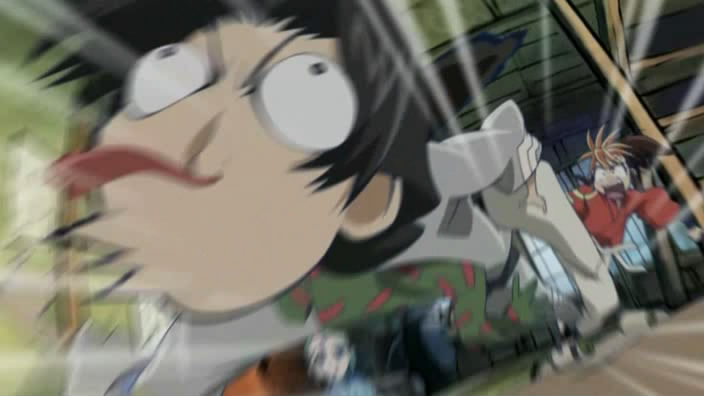
I’d hazard a guess it’s down to the somewhat era-specific references it partly leans on to make it’s points. It takes place in Edo in 1842, when the city was under the strict frugality reforms introduced by Mizuno Tadakuni. Mizuno appears as a character, as does Toyama Kinshiro, a character from the historical detective drama Toyama no Kinsan (not sure of his historical existance) and Torii Yozo, another real government figure who also features in the anime Ayakashi Ayashi.
Also the main character and an “anime exclusive” supporting cast member are named after the rival guilds of firework makers that took part in the Sumidagawa Fireworks Festival.
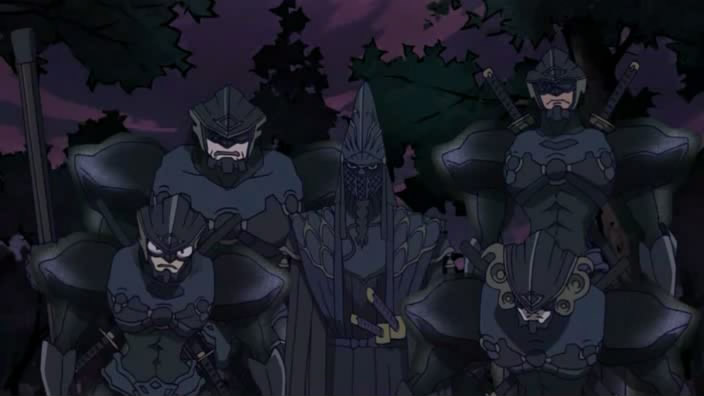
But that density of historical reference shouldn’t put you off. The series is well aware of just how dense and Japan-specific a lot of their references are. They joke at one point that certain gags won’t go over with international audiences. And more importantly, it’s not all about history.
For as well as being dense with cultural references of the era it’s set, the show is accutely aware of both it’s existence as an anime and as an adaptation of a play. It periodically makes reference to it’s own production, breaks the fourth wall to address the audience and has characters interact with the animation in a way to break the fragile illusion of reality it creates.
And it throws gag after gag of varying levels of obscurity, making pop culture references, poking fun at itself, and the anime industry in general (Production IG and Mamoru Oshii in particular get a rather cruel barb thrust their way). Lots of visual, script and audio cues come from who is playing a particular character, there’s FMA, Cowboy Bebop and Gurren Lagann gags that all come up in this way.
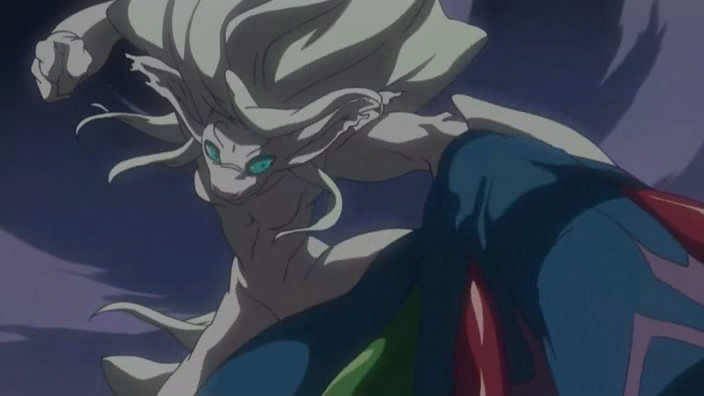
But don’t think it’s just an Excel Saga-esque array of obscure references and satire.
There’s a strong story at the core, that takes some surprisingly dark turns early on, and has a great conclusion that has it’s cake AND eats it. However even the story isn’t the point of the show.
The story, the historical references and the pop culture gags and satire are all in service of an overall theme, which is looking at the role of populist entertainment. It draws a comparison between how entertainment, art and craft still flourished under the frugality of Edo at the time and how the frugality of limited budgets effect the way anime is made. And it looks at what cheap, populist entertainment means to the common man, and the motives behind the people who make it.
Assuming this is a relatively fair adaptation of Nakashima’s play (and beyond expansion of the plot, there’s no reason not to – Nakashima shows up to write an episode later on) then the themes of the story closely mirror the intention of Nakashima and Hidenori Inoue’s Gekidan Shinkansen troupe – the creation of a modern equivalent of kabuki, telling lively, relevant and populist stories.
There’s still much of the theatrical origins about the anime – the credits are written using theatrical terms, background paintings are treated occasionally as physical set dressings, one character is played by the actor who played him in the original play, and in one great episode, the characters put on a play recreating the events of previous episodes.
Now I know some people balk at this level of folding in on itself in a cartoon, prefering a straight narrative. I say these people are wrong. Almost straight out the box, animation has been experimenting with it’s own form, with the best of that experimentation being done in popular vehicles. Max Fleishcer’s Out of the Inkwell series from the 20’s had drawn characters, exist as drawn characters within the “real” world rather than characters in their own drawn world. Tex Avery had characters played with what you could do once you acknowledge the cartoon as frames on film. Bugs Bunny would address the audience directly, providing his own commentary on his actions. Breaking the fourth wall and acknowledging your existance as a fictional creation trapped in film is at the heart of animation innovation, and when a cartoon finds a new twist on that, to actually examine it’s own role in culture it should be embraced.
Oh and in the last 3 episodes it even finds room to take a pop at nationalism (Japanese nationalism in particular, but a lot of the points clearly apply to all nationalists).
Mononoke might have been more visually innovative, Denno Coil might have been more nuanced, Tenga Toppa Gurren Lagann might have more thrills per minute, but Oh! Edo Rocket is a little gem that deserves your attention.
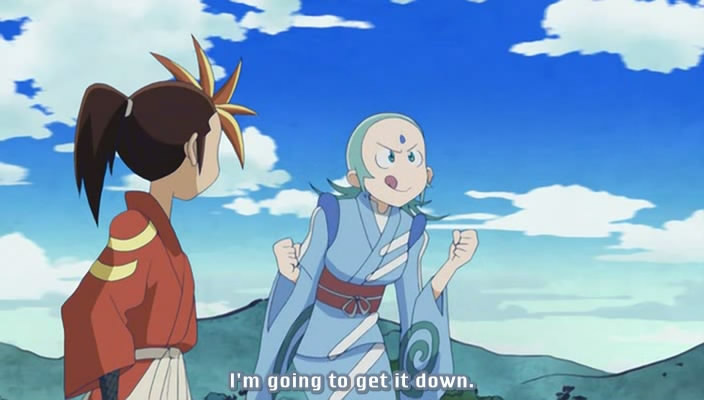
2007 was a great year for TV anime, I’ve still got more series I need to talk about (To Terra, Shigurui, Kaiji, Moyashimon).